If your upstairs bedrooms never warm up, your gas bill jumps every January, or icicles build along your eaves, the problem is almost always over your head — in the attic. In Kitchener’s climate, the attic is where most homes lose the most heat, and it’s usually the single highest-return insulation upgrade a homeowner can make.
Here’s a straight explanation of what attic insulation does, how to tell if yours is failing, the two main materials we install, and what the job actually involves.
Why the attic matters more than any other part of your home
Heat rises. In a poorly insulated home, that warm air you’re paying to produce escapes straight through the ceiling and out the roof. The result is a furnace that runs constantly in winter, an upstairs that bakes in summer, and — in the worst cases — ice dams that form when escaping heat melts roof snow that then refreezes at the cold eaves.
Adding insulation to the attic floor slows that heat transfer down. It’s the least glamorous upgrade in the house and often the most cost-effective, because the attic is easy to access and the material can be installed quickly.
Signs your Kitchener attic needs attention
You don’t need to climb into the attic to suspect a problem. Common signs include:
- Rooms on the top floor that are noticeably hotter in summer and colder in winter than the rest of the house
- Heating and cooling bills that feel high for the size of your home
- Uneven temperatures from room to room
- Ice building up along the roof edge in winter
- A home built before the 1990s that has never had its attic upgraded
Older Kitchener-area homes were frequently built to insulation standards well below what’s recommended today. If yours has never been touched, there’s a good chance it’s under-insulated.
How much insulation should a Kitchener attic have?
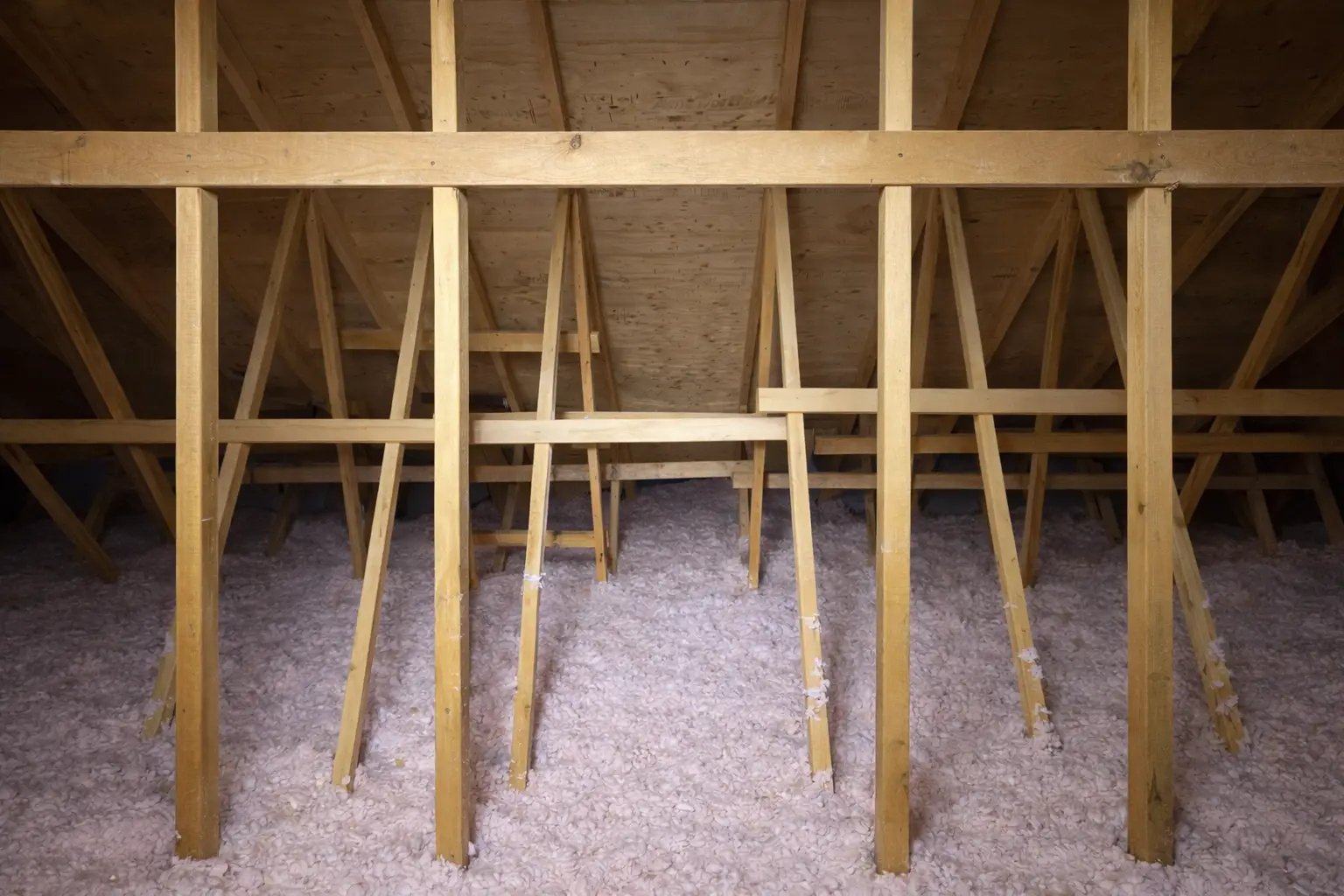
The Ontario Building Code sets a minimum attic insulation level of R-60 for new construction — roughly 22 inches of blown-in material. (This code figure should be confirmed against the current Ontario Building Code before you rely on it for a specific project.) R-value is simply a measure of resistance to heat flow: the higher the number, the better the insulation performs. Think of it like the tog rating on a duvet — a higher number means warmer.
Many existing homes sit far below R-60, sometimes at R-20 or less. The good news: in most cases you don’t need to remove what’s already there. As long as the existing insulation is clean and dry, new material is blown right over top, and the R-values add together.
The two materials we install: cellulose vs. fibreglass
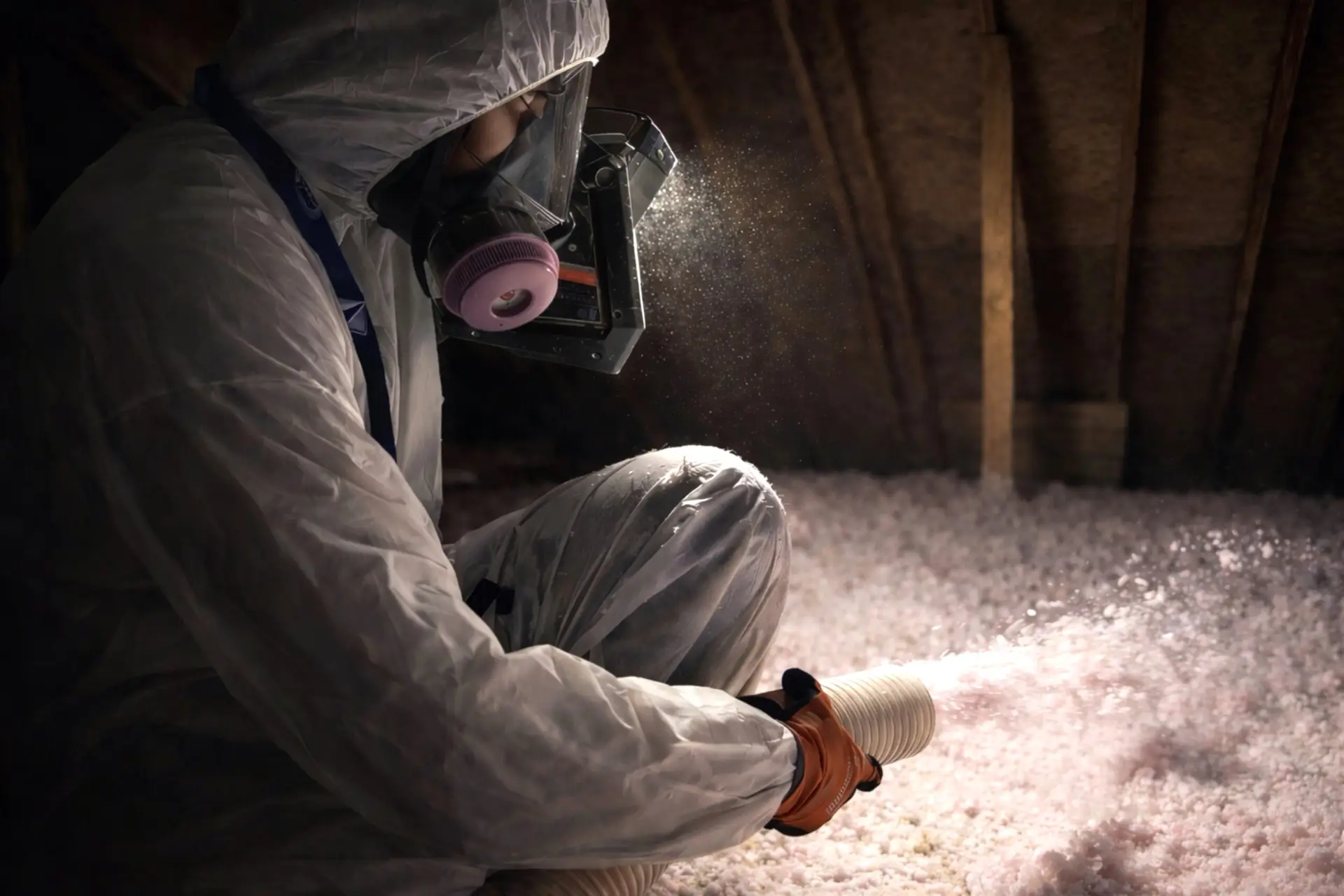
Both are “blown-in” — loose-fill insulation installed with a machine that fills every gap and joist bay that rigid batts can’t reach. The difference is the material.
Cellulose blown-in is made from recycled paper, is denser, and delivers roughly R-3.4 to R-3.8 per inch. Its density makes it better at slowing air movement through the attic, which is why it’s often the stronger performer per inch. (R-value ranges are commonly cited industry figures and vary by product.)
Fibreglass blown-in is made from spun glass fibres, is lighter, and delivers roughly R-2.7 to R-3.0 per inch. It’s typically the more cost-effective option and is eligible under current rebate programs.
Neither is universally “better.” The right choice depends on your budget, your existing insulation, and your goals. A proper on-site assessment is the only honest way to make that call.
When old insulation has to come out first
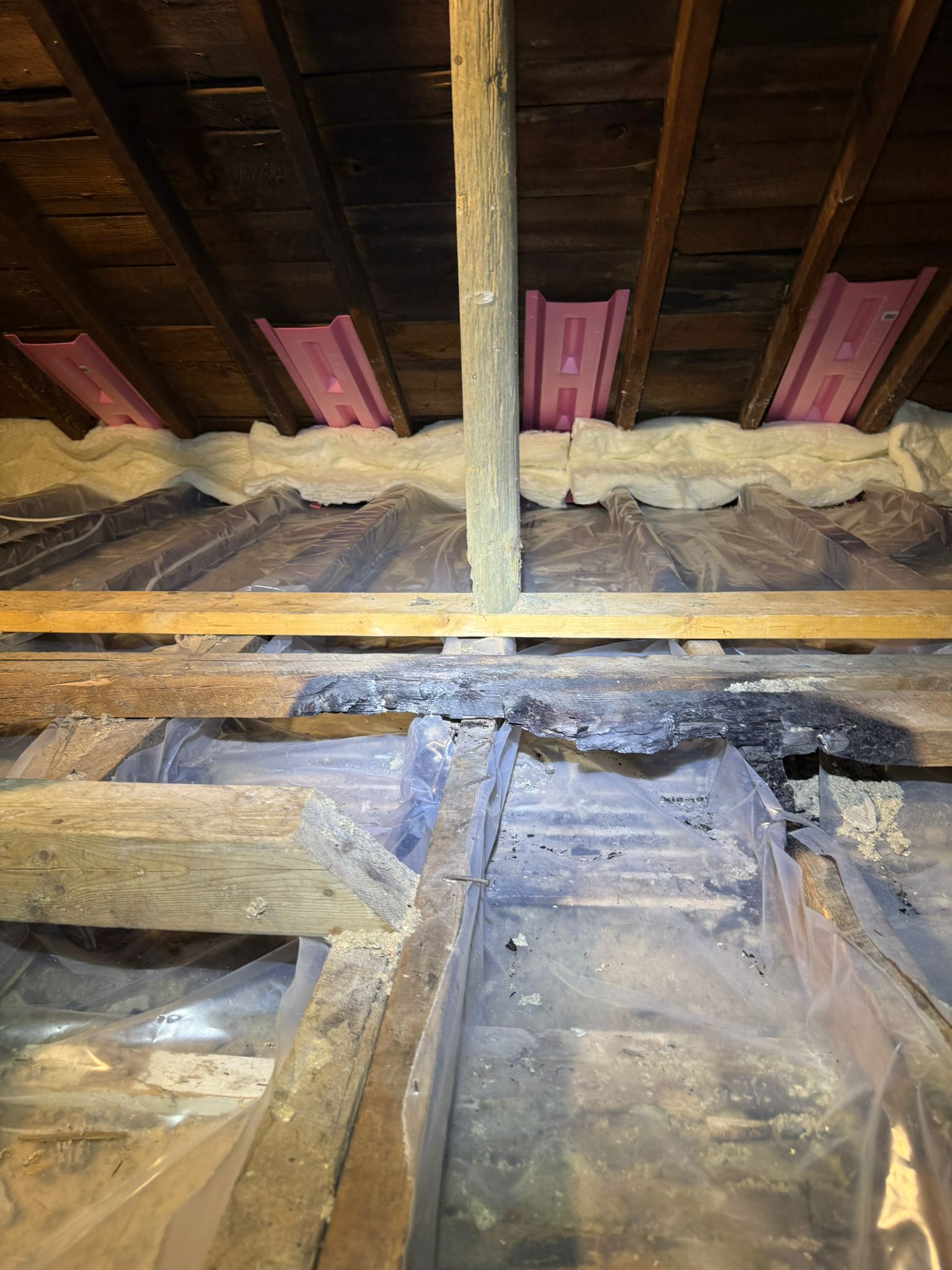
Sometimes topping up isn’t an option. If the existing insulation is contaminated — mold, water damage, or rodent activity — it needs to be removed before new material goes in. Old insulation is vacuumed out, the space is cleaned, and then fresh insulation is installed. If your attic is dry and clean, this step isn’t necessary.
Proper attic ventilation also matters. Baffles (rafter vents) at the eaves keep air flowing so the attic doesn’t trap moisture — an important step before blowing in new insulation.
What the process looks like
- Free consultation and assessment. A project manager visits your home, inspects the attic, and provides a detailed cost estimate.
- Materials and permits. We handle sourcing and any required permits.
- Rebate check. If your project qualifies for a government rebate, we start that application for you.
- Installation. Most attic jobs are completed in a single day. You don’t need to leave your home.
- Post-service confirmation. We confirm the work is complete and update you on any rebate application status.
There may be money back on the table
Ontario’s Home Renovation Savings Program currently offers rebates for qualifying attic insulation upgrades, and the standalone attic path doesn’t require an energy assessment. Program amounts, eligibility, and deadlines change, so we confirm what’s actually available for your home before quoting anything. We handle the paperwork.
Get a straight answer for your home
Every attic is different. The only way to know what yours needs — and what it will cost — is an in-person look. We serve Kitchener and the surrounding Waterloo Region, and the assessment is free.
Call (416) 315-0471 or request a free on-site quote.
Frequently asked questions
Do I have to remove my old attic insulation first? No — unless it’s contaminated by mold, water, or rodents. Otherwise we add new insulation over the existing layer and the R-values combine.
Do I need to leave my home during installation? No. Residents can stay in the home during the work.
How long does attic insulation take? Most attic jobs are completed in a single day, depending on the size and whether removal is required.
Cellulose or fibreglass — which is better? Cellulose is denser and performs slightly better per inch; fibreglass is typically more cost-effective. Both are effective and rebate-eligible. The right one depends on your home and budget.
How much does attic insulation cost in Kitchener? It depends on the area, the material, and your current insulation level. We quote each job individually after a free on-site assessment rather than charging a flat rate.